Highly infectious virus can cut crop yields by 30-70%
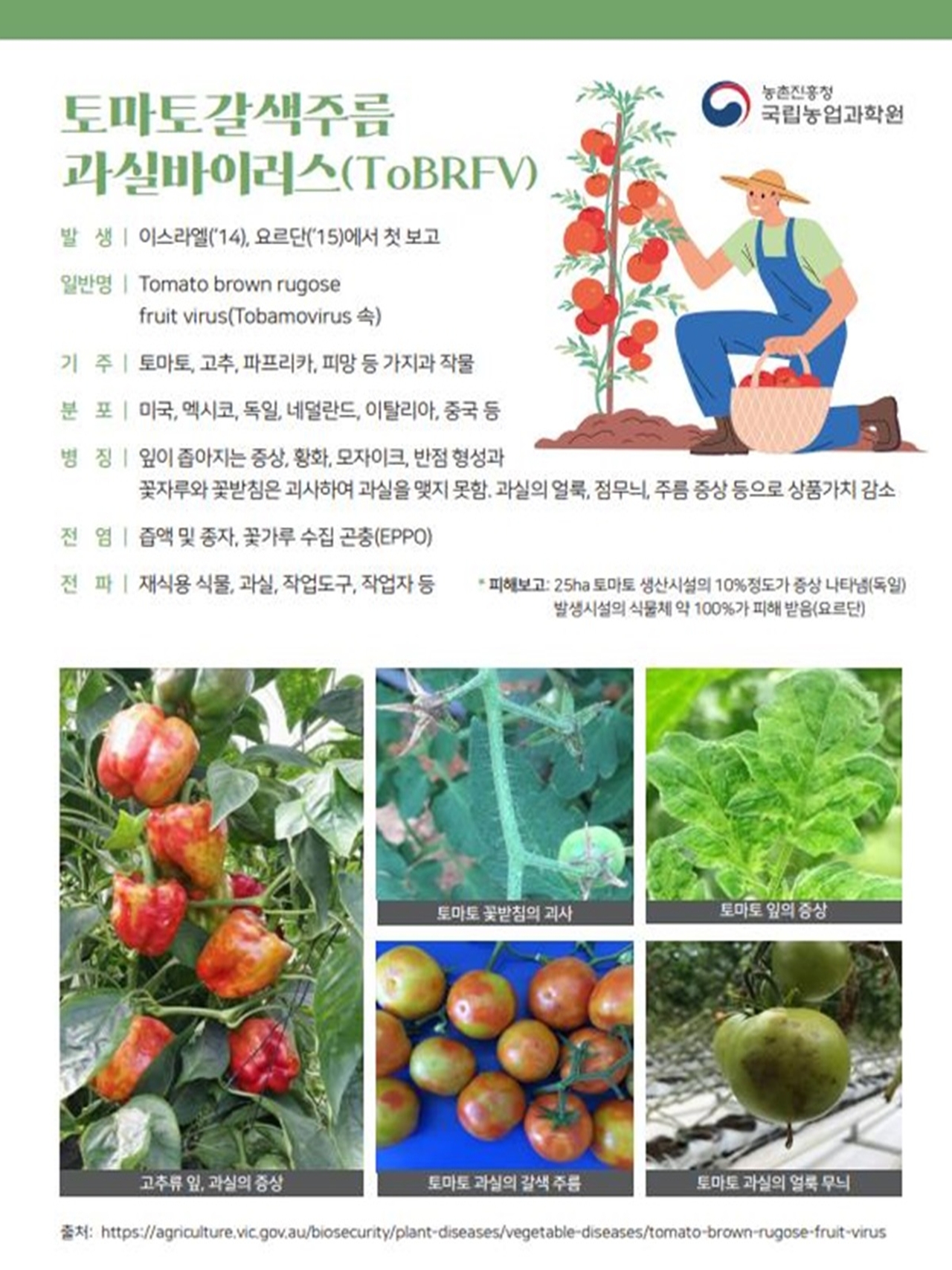
A virus that can severely damage tomatoes and peppers has been detected in greenhouse crops in Busan, the city’s Agricultural Technology Center said Sunday, urging growers to limit contact between farms.
The pathogen, known as the tomato brown rugose fruit virus, or ToBRFV, is subject to plant quarantine controls in South Korea. It affects tomatoes and peppers, including bell peppers and chili peppers.
Infected tomatoes can develop brown spots and wrinkled patches, and the fruit may ripen unevenly. Infected plants can also develop mosaic patterns and wrinkling on their leaves, which may become unusually narrow and needle-like.
Tissue in the stems and flower sepals, the small leaves surrounding a flower, can die, interfering with fruit development or causing fruit to drop prematurely.
The virus does not pose any danger to humans or animals, and it is safe to eat produce infected with ToBRFV.
Yield losses of 30 to 70 percent have been reported in infected crops, a potentially substantial financial blow to growers.
There is no chemical treatment for infected plants. The virus spreads easily through contact, including through workers’ hands, gloves, pruning shears, footwear and work clothes. It can also remain infectious for long periods on the surface of seeds and in plant debris.
The Busan center urged people to avoid visiting farms with suspected infections and to minimize contact between farms.
It advised growers to restrict access to greenhouses, take precautions to prevent the virus from spreading through contact and report suspected infections without visiting the center in person.
Meanwhile, in South Chungcheong Province, infections have been confirmed at 65 farms covering 43.1 hectares, Kukinews reported Saturday, citing the province’s agricultural research and extension services.
Growers in Busan can contact the center’s agricultural technology team at 051-970-3721 for advice on symptoms or information about testing.
shwang9@heraldcorp.com